
ReviewsThe Many Moods of Hugo Wolf
Hofheimer Hall was full. Students from high school and college were there and the program was well designed to educate and entertain both novice and accomplished German speakers. The selection showcased Wolf settings of songs contrasting the many moods that Wolf is a master at expressing. In Verbogenheit (Seclusion) the text describes the heaviness of a world weary person who seeks his own solitude rather than endure either life's joy or pain. This was followed by Elfenlied (Elf Song), a charming story of an elf awakened at eleven by the watchman and his confusion at being brought into a night world so suddenly. With its music box-like piano and light-hearted text, what student could fail to be brought into that magical world. The fine accompaniment by George Stone often became evident as it did in these songs. Wolf writes sections for the pianist which set, complete or contradict the mood of the sung text. Mood shifts continued in Auf ein altes Bild (To an Old Picture) which tells with subtle understatement the story of the tragic life of the child Jesus, encapsulated in the opening word of the last line, "alas." In Lebe wohl (Farewell) Ms. Elia's deep mezzo tones indicated that her voice has become richer and deeper since last season and her soprano range was a smooth pleasant sound throughout. Ms. Elia pointed out that Wolf only set texts that had previously been set by other German composers if he felt that the text had not been adequately served. When Schubert set Goethe's text Ganymed he emphasized the use of nature in the poem. On the other hand, Wolf strived to bring us into a portrayal of the bliss beyond this world. Piano key changes move higher leading the vocalist upward toward the bosom of an all loving Father. Perhaps the best song for a youthful audience inexperienced in art song was Epiphanias (The Three Holy Kings) written by Wolf when he spent the Christmas holidays with the Heinrich and Melanie Köchert family including three young daughters. This humorous song of the "Three Holy Kings with their star who eat, drink and don't like to pay" was acted out by three young women while Ms. Elia sang the verses. The piano with its extended solo passages gives time for the pantomime to unfold. The other selections on the program strengthen the theme of introducing Wolf's rich diversity of compostions: Er ist's (a spring song), Blumengruß (The Bouquet) and Kennst du das Land? (Do you know the land where the lemon blossom grows?). Ms. Elia met the challenge of bringing alive the songs of Hugo Wolf in all their emotional diversity with beauty and excitement. More Virginia Wesleyan Back to Review Index Back to Top Home Calendar Announcements Issues Reviews Articles Contact Us |
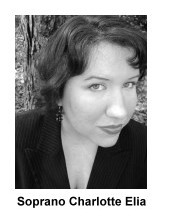 Charlotte Elia gave the second recital in the series Liedermorgen
that she began last season with the Virginia Wesleyan College Department
of Foreign Languages and Literature. This recital at 11 am October
23, 2003, brought students and interested listeners an excellent
experience of art song sung in German. The earlier program offered
lieder by several of Germany's finest composers but today's program
offered Hugo Wolf songs exclusively. Many listeners find his settings
to be the epitome of German song.
Charlotte Elia gave the second recital in the series Liedermorgen
that she began last season with the Virginia Wesleyan College Department
of Foreign Languages and Literature. This recital at 11 am October
23, 2003, brought students and interested listeners an excellent
experience of art song sung in German. The earlier program offered
lieder by several of Germany's finest composers but today's program
offered Hugo Wolf songs exclusively. Many listeners find his settings
to be the epitome of German song.