Stephen Coxe and Friends
Create a Magical Evening of Chamber Music
Attending the faculty recital of Stephen Coxe at Chandler Recital Hall on January, 24, 2011 was like stepping blithely into another world, into an atmosphere far away from the daily hussle, a rarefied world of intelligence and reflection animated by a creative, quiet energy. As composer, pianist, novice percussionist and organizer, Dr. Coxe constructed a special experience in time.
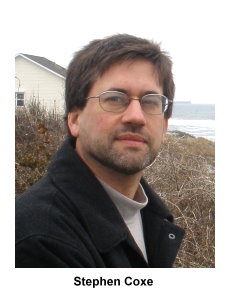 Playing from memory, our pianist opened the program with four selected Préludes by Claude Debussy (1862-1918). Debussy approached the instrument in a unique way: quiet, lyrical passages are not a setup for the next loud, assertive section as is true in so much piano music of the romantic era. Mr. Coxe's polished interpretations were a study in French style. Danseuses de Delphes (Delphic Dancers) was sensual, slow and solemn. Bruyères (Heath) has a flowing line enriched by thick, resonant textures. It approaches intensity only to hold back. Hommage à Samuel Pickwick, Esq. has a powerful opening with notes created by a more emphatic touch – a version of God Save the Queen sounded out in low notes. Woven into the fabric of La Cathédral engloutie, the Sunken Cathedral that sinks into the sea, then reappears, are suggestions of resonant chimes, ocean swells, tolling bells, distant plainchant and the swell of a mighty organ as the sound dies away as textures in the lowest notes swallow-up the whole scene. Playing from memory, our pianist opened the program with four selected Préludes by Claude Debussy (1862-1918). Debussy approached the instrument in a unique way: quiet, lyrical passages are not a setup for the next loud, assertive section as is true in so much piano music of the romantic era. Mr. Coxe's polished interpretations were a study in French style. Danseuses de Delphes (Delphic Dancers) was sensual, slow and solemn. Bruyères (Heath) has a flowing line enriched by thick, resonant textures. It approaches intensity only to hold back. Hommage à Samuel Pickwick, Esq. has a powerful opening with notes created by a more emphatic touch – a version of God Save the Queen sounded out in low notes. Woven into the fabric of La Cathédral engloutie, the Sunken Cathedral that sinks into the sea, then reappears, are suggestions of resonant chimes, ocean swells, tolling bells, distant plainchant and the swell of a mighty organ as the sound dies away as textures in the lowest notes swallow-up the whole scene.
Though the next section was a composition by Dr. Coxe, I will speak of it later and point out the contrast in mood of the next solo piano piece. Aaron Copland (1900-1990) Piano Variations is the work of a brash thirty-year old asserting his new-found freedom from old European forms, embracing dissonance and jazz with no concern with pleasing an audience. With its bold four-note theme presented in various permutations with harsh interruptions, it was in sharp contrast to the Debussy. The structure of the piece with an overall harmonic conception came through clearly in the spiky, percussive playing demanded by Mr. Copland.
Still in the role of solo pianist, Mr. Coxe presented Amores by John Cage (1912-1992). The opening and closing movements of this four-movement piece are for prepared piano. The two center sections are for three percussionists and this was the time that the featured pianist became a novice percussionist. Some of the strings of the piano are “doctored” in various ways to produce abnormal tone qualities. In 1943 this was a radical move but developments since, especially electronically produced sounds, made the experience seem charming in an old-fashioned way. The sound of a toy harpsichord or a gamelan orchestra come to mind in the first piece. In the second movement, Nikolas White and Sarah Williams, both ODU students, played the more demanding parts of II.Trio for nine tom-toms and pod rattle. At the front of the stage on their knees all three played in quiet, deep concentration in the third movement, III.Trio for 7 woodblocks, not Chinese. The last movement returned to the prepared piano. The framework for the piece is its rhythmic structure and was a surprisingly delightful experience.
We heard two compositions by Dr. Coxe. With Clara Lee on cello, we heard the first movement of Cello Sonata (2007). The motion of the music was a smooth, singing tone structured in classical sonata form. As equal partners, the piano and cello create a lovely auditory dance in space. When two contrasting themes and an opposing key arrive they bring expanded and complex harmony. In the dialogue between the two voices the feeling is somber, at times even troubled .
In a setting of poetry by Peter Everwine, composer Coxe drew on two fellow ODU professors, contralto Kelly Samarzea and Anastasia Migliozzi on viola, who gave a superb presentation of his 2009 song cycle. In the summer Dr. Coxe is composer-in-residence and faculty member at the Yellow Barn Music School and Festival in Vermont. Of Peter Everwine, a major voice in American poetry, he says “it has been a great pleasure to meet him while we were in residence in Vermont. The three poems, How it Is, It Was Autumn and Night are inspired by nature and for me memory. They have a haunting quality and this relates to my feeling of being overwhelmed by nature in all its extreme beauty in late summer in Vermont.”
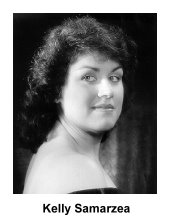 The lovely, deep tones of Ms. Samarzea's voice blended in a quiet, even somber way with the tone of Ms. Migliozzi's viola creating interesting colors to enhance the lines. For example, in It Was Autumn the cacophony of summer night sounds are created by the lone instrument. While the upward opening sweeps of instrumental sound create a mood filled by the voice singing Night, lamplight falls on a white tablecloth in the quiet where a magical dinner event happens. Mysterious and beautiful. The audience, enthralled, cheered and demanded a second bow. Speaking of the audience, many were students and all were pin-drop quiet through every piece and clapped only at the end of pieces, not for movements. The lovely, deep tones of Ms. Samarzea's voice blended in a quiet, even somber way with the tone of Ms. Migliozzi's viola creating interesting colors to enhance the lines. For example, in It Was Autumn the cacophony of summer night sounds are created by the lone instrument. While the upward opening sweeps of instrumental sound create a mood filled by the voice singing Night, lamplight falls on a white tablecloth in the quiet where a magical dinner event happens. Mysterious and beautiful. The audience, enthralled, cheered and demanded a second bow. Speaking of the audience, many were students and all were pin-drop quiet through every piece and clapped only at the end of pieces, not for movements.
Several students were from the Governor's School for the Arts where Dr. Coxe teaches in the Instrumental Music Department. Drawing from that part of his musical network to put together the closing piece, Maurice Ravel (1875-1937) Chansons Madécasses, he chose as collaborators fellow teachers Patti Watters, flute, Jeffrey Phelps, cello and from Florida, soprano Nansi Carroll. Ms. Carroll received her doctorate from Yale in 1982 and is a composer with over 300 works. She has been a faculty member at various universities, most recently University of Florida and is Artistic Co-Director (along with Dr. Coxe) of the Jubilus Festival.
Chansons Madécasses (Madagascar Songs) has an economy and clarity of color for each voice in this quartet, especially flute, cello and piano. The singer in the first song waits for the arrival of his beloved Nahandove. Each repetition of the name, and there are several, bespeaks sensual love. They die together of ecstasy until pleasure passes like lightening, only then do they plan to get together again at evening. The opening word of the second song, Aoual (“A-wa!”) cuts deeply into the silence for it is a cry of the black natives oppressed by the white invaders. The song recounts how they warded off the invaders and warn the young to be vigilant. The instrumental ending is stunning. The last song is a vignette of a hot afternoon "It is sweet to lie down in the hot afternoon under a leafy tree and wait for the evening breeze to bring coolness." Come girl and sing to me of little events in daily life. When the breeze comes, the mood abruptly shifts “Go now and prepare the evening meal.” The instrumental trio gave a superb performance but the smoothed-out vocal line by the singer indicated lack of involvement with the text .
Bringing a lovely evening to a close, the reception, hosted by Stephen Coxe's wife Mariana Szklo-Coxe and her mother Hilda made the pleasure of the evening complete.
For readers who want to hear Ravel's Chansons Madécasses, my current favorite is CD B0002124-02 on DG titled Magdalena Kožená, Songs. Fourteen additional songs include works by Shostakovich, Respighi, Schuloff and Britten.
Faculty Recital: Composer/Pianist Stephen Coxe
with Paul Kim and Solo Vocalists Kelly Montgomery,
Anna Sterrett, Agnes Mobley Wynne
Chandler Hall, January 26, 2015
Review by John Campbell
Stephen Coxe as usual offered an evening of rarely heard repertory—this time by Charles Ives, Johannes Brahms and a little song by Maurice Ravel as well as his own Whitman cycle. He was pianist for every piece. He opened the evening with the third movement of Charles Ives (1874-1954) Piano Sonata No. 2 Concord , Mass., 1840-60. The 6.5 minute movement, “The Alcotts” opens so very quietly, like early morning before the bustle of the day starts and is followed by the stentorian grandeur of a quote from Beethoven. Of the movement, Ives wrote in his Essays Before A Sonata quoted in the program booklet “…the memory of that home under the elms – the Scotch songs and the family hymns that were sung at the end of each day." I heard hints of songs that warmed the heart, thorny passages where the tune is stuck, unable to advance until grandeur wells up and bursts, leaving a quiet moment of reflection.
This recital fulfilled a promise given at an early December recital that Kelly Montgomery would sing Stephen Coxe’s complete Whitman Songs (for Lee Teply 1953-2014) (2014). Four poems by Walt Whitman (1819-1892) were set by Stephen Coxe as a spontaneous response to the loss of his friend and colleague. Carefully tailored to the vocal range of Ms. Montgomery’s rich, contralto voice, the texts were in the program but her diction was crystal clear throughout. Whitman’s words spoke of eternity and the power in his words was enhanced by the music. The pauses and solo piano between verses gave the work a natural pacing—unhurried, as we might imagine eternity to be. The song On the Beach at Night was followed by That Shadow, My Likeness with its firm though-line for voice. Written from the shadow’s perspective observing the busy person in the world wondering if that is really “me,” the singing was so lovely, so gentle.
From Montauk Point, Whitman’s words show the world in a breathtaking perspective as seen from the beak of an eagle flying over an ocean beach. The wild unrest of the waves was there in the piano. A Clear Midnight, premiered in December, 2014 and reviewed here, closed the set. Something wonderful is being reported here:
This is thy hour O Soul, thy free flight into the wordless,
Away from books, away from art, the day erased, the lesson
done,
Thee fully forth emerging, silent, gazing, pondering the
themes thou lovest best,
Night, sleep, death and the stars. The music left us with tender feelings, both consoling and with a sense of deep loss. The composer’s spontaneous response to Lee’s death was to pen this music and to offer it to us after many revisions. It was designed to use the strengths of Ms. Montgomery’s voice and it was a perfect experience!
The heart of the program was Brahms’ (1833-1897) Sechs Klavierstüke Op. 18 (1893) that took us to intermission. In conversation pianist Lee Jordan-Anders spoke rhapsodically about Stephen Coxe’s performance. I could only agree.
The second half of the evening began with a song by Dr. Coxe, La nuict froide et sombre (2014) (The cold and somber night), on a text by Joachim du Bellay (1525-c.1560) with a setting that might have been composed by an Impressionist. The text speaks of a night that rolls out as sweet as honey, carrying us into sleep followed by the early glow of day that brings us back to toil. The closing line says “The varied tint weaves and composes the great universe.” It left me wanting to stand and ask for the brief, sweet experience to to be repeated. Anna Sterrett was soloist. Morgen, Op. 27, No.4 (1894) by Richard Strauss (1864-1949) was the companion piece. The piano set a mood of deep nostalgia. After the text was sung in her light soprano voice, the ending offered a sense of peace.
Conductor of the Old Dominion Orchestra, Paul Kim, traded his baton for a bow as he joined Stephen Coxe as violinist in Charles Ives’ Violin and Piano Sonata No. 4 (1916) “Children’s Day at the Camp Meeting.” Once again reflecting his small town American life experience, Ives chooses an actual happening to illustrate musically; outdoor religious meetings often included the boisterous boys spontaneously marching when the congregation sang a hymn with a march rhythm.
From Ives’ own notes for his fourth sonata, published in 1942, he cites Lowell Mason’s hymn, Work for the Night is Coming, as the one that got the boys going. The second movement is quieter and more serious with its singing tone drawn from nature—the wind in the pines or a running brook, though there is a spirited section that pauses momentarily and settles into the quiet toward evening. As in the first movement, the third has a marching rhythm that accelerates with hints of Robert Lowery’s Gather at the River, a hymn tune that often appears in Ives’ compositions.
Still considered avant garde music, the playing was precise and at times sweetly listenable but with an edge that kept the listener engaged.
Recalling Ives’ piece Unanswered Questions, Steve Coxe programmed a little song by Ravel, L’Énigme éternelle, sung by Agnes Mobley-Wynne, as an answer to Ives’ question. As it turns out, it was a world-weary “ta la, tra la la la la.” Charming!
Printer Friendly
More Stephen Coxe and Friends
Back to Review Index
Home
Calendar
Announcements
Issues
Reviews
Articles
Contact
Us
|

